
AI Shopping and Customer Acquisition Costs: The New Economics of Retail Discovery
By Pritam Khedekar · Sep 20, 2026
For years, eCommerce companies have competed for customer attention through Google Search, paid social media, influencer marketing, email, and marketplace advertising.
The economics were familiar:
Marketing investment → Website traffic → Conversion → Customer acquisition → Repeat purchases
Artificial intelligence is beginning to change this sequence.
Consumers are increasingly asking AI assistants to research products, compare alternatives, identify suitable brands, and recommend what to buy. Instead of visiting multiple websites before making a decision, shoppers can receive a shortlist through a single conversation.
This creates a new question for retailers:
Will AI shopping reduce customer acquisition costs—or simply transfer the cost of customer acquisition to a new set of technology platforms?
The answer depends on how retailers adapt their product data, customer relationships, marketing strategies, and measurement systems.

1. Why Customer Acquisition Costs Matter More Than Ever
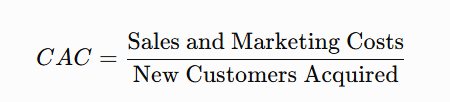
Customer acquisition cost (CAC) measures the cost of obtaining a new customer.
A simplified formula is:
For example, suppose an eCommerce brand spends $50,000 on marketing and acquires 1,000 new customers.
Its CAC is:
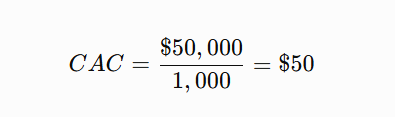
However, a $50 CAC does not automatically mean the business is profitable.
The retailer must consider:
- Gross margin
- Fulfillment expenses
- Payment processing
- Returns
- Discounts
- Customer support
- Repeat purchase rate
- Customer lifetime value
A retailer selling a $100 product with a $25 contribution margin cannot sustainably acquire customers at $50 unless repeat purchases or other economic benefits justify the investment.
This is where AI shopping could become important.
If AI-referred customers arrive with stronger purchase intent and convert at higher rates, retailers may acquire customers more efficiently—but only if the cost of reaching those customers remains manageable.

2. AI Shopping Compresses the Customer Journey
Traditional online shopping often involves several stages:
- Search for a product category.
- Visit multiple websites.
- Compare features and prices.
- Read reviews.
- Evaluate alternatives.
- Return later to complete the purchase.
AI shopping compresses many of these steps into a conversation.
A shopper might ask:
"Find a reliable laptop under $1,000 for software development, with at least 16GB RAM and good battery life."
The AI assistant can interpret the requirements, compare products, summarize trade-offs, and provide recommendations.
The consumer may arrive at a product page after much of the research has already occurred.
This is known as buyer journey compression.
The retailer may receive fewer exploratory visits but more highly qualified visitors.
That creates an important distinction:
Lower traffic does not necessarily mean lower commercial value.
Retailers should evaluate the quality and profitability of traffic, not simply the number of sessions.

3. Early Data Shows Stronger AI-Referred Shopping Intent
Shopify's Q1 2026 commerce analysis reported that AI-referred sessions beginning on product detail pages converted at nearly 50% higher rates than comparable organic-search sessions. AI-referred orders also had average order values approximately 14% higher than organic search.
These findings should be interpreted carefully.
They show that AI-referred traffic can have strong commercial performance in the measured Shopify data. They do not prove that every retailer will experience the same conversion rates or that AI traffic is already replacing traditional search.
Performance can vary based on:
- Product category
- Customer intent
- Brand recognition
- Product data quality
- AI platform
- Geography
- Attribution method
- Retailer checkout experience
The strategic implication is not to abandon existing acquisition channels.
It is to measure AI shopping as a distinct channel while continuing to evaluate organic search, paid advertising, marketplaces, and owned customer relationships.
4. AI Could Reduce Some Acquisition Costs
AI shopping may improve acquisition efficiency through several mechanisms.
Better purchase intent
An AI assistant can interpret a shopper's specific requirements before recommending products.
A consumer searching for "running shoes" has broad intent.
A consumer asking for "waterproof running shoes for winter trail running under $150" has more specific intent.
If the recommendation matches the requirement, the retailer may receive a more qualified visitor.
Reduced discovery friction
AI can summarize product differences, reducing the number of pages a consumer needs to visit.
This can shorten the path between initial interest and purchase.
More relevant recommendations
AI systems can use product attributes, reviews, user preferences, and contextual requirements to recommend products.
Relevance can improve conversion—but retailers must ensure the underlying information is accurate and complete.
Potentially lower dependence on broad advertising
If consumers increasingly discover products through recommendations, some brands may reduce spending on broad awareness campaigns and focus more on product discoverability and conversion.
However, this does not mean paid advertising disappears.
It may shift toward sponsored recommendations, AI platform partnerships, product feeds, and other forms of visibility.
5. The New Cost: Becoming Visible to AI
Traditional search engine optimization focuses on ranking web pages for relevant queries.
AI shopping introduces an additional challenge: being selected and accurately represented in an AI-generated recommendation.
AI systems may evaluate:
- Product title
- Product description
- Product attributes
- Price
- Availability
- Reviews
- Shipping information
- Return policy
- Brand authority
- Structured product data
A product that is difficult for AI systems to understand may be less likely to appear in relevant recommendations.
This creates new operational costs for retailers:
- Product information management
- Structured data implementation
- Catalog maintenance
- Content optimization
- Feed integrations
- Review management
- AI visibility monitoring
- Accuracy and compliance controls
The retailer may spend less on some traditional acquisition activities but more on the infrastructure required to become machine-readable and recommendation-ready.
AI does not eliminate acquisition costs. It changes where some of those costs occur.

6. Product Data Becomes a Competitive Asset
In traditional eCommerce, product data supported website navigation, search, merchandising, and inventory operations.
In AI-mediated commerce, product data also becomes an input into recommendation systems.
Incomplete information can create commercial disadvantages.
For example, a retailer selling a winter jacket should provide accurate details about:
- Insulation
- Waterproof rating
- Fit
- Material
- Temperature suitability
- Available sizes
- Care instructions
- Price
- Inventory
- Delivery expectations
A structured and comprehensive catalog makes it easier for AI systems to compare the product against a shopper's requirements.
Shopify has emphasized the importance of structured catalog data in AI commerce, while NIQ identifies AI-readable product attributes and discoverability as increasingly important for brands.
This means product information management is no longer only an operational or SEO concern.
It becomes part of customer acquisition strategy.
7. The Customer Relationship Problem
The most important strategic risk may not be higher technology costs.
It may be losing direct access to the customer.
In traditional eCommerce, the retailer can observe much of the customer journey:
- Search behavior
- Website navigation
- Product views
- Cart activity
- Email engagement
- Checkout behavior
- Purchase history
When an AI platform mediates discovery, some of that interaction happens outside the retailer's website.
The AI platform may control:
- The initial conversation
- Product comparison
- Recommendation order
- Customer questions
- The transition to checkout
- Potentially the payment experience
Reuters reported in August 2026 that retailers were adopting AI shopping traffic while also attempting to preserve direct customer relationships and access to behavioral data.
This creates a difficult economic trade-off.
A retailer may welcome an AI platform that delivers high-converting traffic.
But if the platform retains the customer relationship, the retailer may lose valuable information used for:
- Personalization
- Loyalty programs
- Cross-selling
- Retention marketing
- Customer lifetime value analysis
- Repeat purchase campaigns
The immediate sale may be profitable while the long-term relationship becomes less valuable.
8. Customer Acquisition Could Become More Competitive
AI recommendations may reduce the importance of traditional keyword rankings, but they can create new forms of competition.
Retailers may compete for:
- Share of AI recommendations
- Product inclusion
- Recommendation position
- Data accuracy
- Review credibility
- Brand authority
- AI platform visibility
- Sponsored placement
This could create a new marketing metric:
Share of recommendation
A retailer might ask:
"When customers ask AI assistants for products in our category, how frequently are our products recommended?"
This is different from traditional market share or search-engine ranking.
However, recommendation visibility must be measured alongside commercial outcomes. Being mentioned frequently does not necessarily mean the product generates profitable sales.

9. AI Shopping May Create New Advertising Gatekeepers
Traditional digital advertising is already concentrated among major platforms.
AI shopping could introduce another layer of intermediation.
AI platforms may control the interface through which customers:
- Search
- Compare
- Evaluate
- Select
- Purchase
This gives platforms potential influence over which products consumers see.
The business model could evolve toward:
- Sponsored product recommendations
- Paid product visibility
- Commission-based transactions
- Referral fees
- AI commerce partnerships
- Advertising based on shopping intent
The commercial challenge is transparency.
If an AI assistant recommends a product because it is the best fit, that is different from recommending it because a brand paid for preferential placement.
Retailers and AI providers will need clear rules around advertising disclosure, ranking, product accuracy, and consumer trust.
The Federal Trade Commission has already faced questions concerning transparency in AI shopping assistants and product-origin information, illustrating the broader governance challenges associated with AI-mediated commerce.
10. How Retailers Should Measure AI Acquisition
Retailers should avoid evaluating AI shopping solely through traffic volume.
A more useful framework includes:
| Metric | Business purpose |
|---|---|
| AI-referred sessions | Measures channel reach |
| Conversion rate | Measures purchase efficiency |
| Revenue per session | Measures commercial value |
| Average order value | Measures basket economics |
| New-customer rate | Identifies acquisition contribution |
| CAC by AI source | Measures acquisition cost |
| Contribution margin | Measures profitability |
| Repeat purchase rate | Measures retention |
| Customer lifetime value | Measures long-term value |
| Assisted conversions | Captures indirect influence |
| Data capture rate | Measures customer relationship retention |
The correct comparison is not simply:
"Does AI generate more traffic than Google?"
The better question is:
"Does AI generate more profitable customer relationships per dollar invested?"
A retailer should compare AI shopping against existing channels using consistent attribution and contribution-margin calculations.

11. A Practical Strategy for Retailers
Step 1: Improve product data quality
Ensure product pages contain complete, accurate, structured information.
Step 2: Monitor AI visibility
Track whether AI systems accurately represent the retailer's products, pricing, availability, and policies.
Step 3: Create channel-specific measurement
Separate AI-referred traffic from organic search and paid media wherever attribution is reliable.
Step 4: Protect the direct customer relationship
Use appropriate consent-based mechanisms to encourage account creation, loyalty enrollment, email subscriptions, and repeat purchases.
Step 5: Test before scaling
Begin with a limited product category or customer segment.
Measure:
- Acquisition cost
- Conversion
- Gross margin
- Returns
- Repeat purchases
- Data capture
- Incremental sales
Step 6: Maintain traditional acquisition capabilities
AI shopping is developing alongside existing channels. Organic search, email, paid advertising, marketplaces, and physical stores remain important parts of the customer journey.
12. The Future: From Traffic Acquisition to Intent Acquisition
The traditional eCommerce model often rewards retailers for generating visits.
The emerging AI model may reward retailers for being the right answer to a specific customer need.
That changes the economics of discovery.
The retailer may not need to win every broad search query. It needs to be discoverable when its product is relevant, competitively positioned, trustworthy, and available.
This could favor retailers with:
- High-quality product data
- Strong customer reviews
- Reliable fulfillment
- Competitive pricing
- Distinctive product value
- Consistent brand credibility
At the same time, retailers may become more dependent on AI platforms that mediate demand.
The outcome will depend on whether retailers can balance external discovery with direct customer ownership.

Conclusion: AI May Change Who Pays for Customer Acquisition
AI shopping has the potential to improve customer acquisition efficiency by compressing product research, increasing recommendation relevance, and delivering shoppers with stronger purchase intent.
But lower acquisition costs are not guaranteed.
Retailers may face new expenses involving data infrastructure, catalog optimization, AI platform access, attribution, and customer relationship management.
The central economic shift is that retailers may no longer compete only to rank on search engines or place advertisements in front of consumers.
They may increasingly compete to become the product that an AI system recommends.
The most successful retailers will need to measure both sides of the equation:
Short-term acquisition efficiency + long-term ownership of the customer relationship
The strategic question for retail leaders is therefore:
When AI becomes the intermediary between consumer intent and retail transactions, who captures the value—and who pays to be recommended?


Comments
No approved comments yet.