The Drive-Thru Is Now a Software Product: How AI, Data, and Digital Menus Are Rewriting QSR Economics
By Pritam Khedekar · Oct 11, 2026
A Lane That Behaves Like an App
Picture a drive-thru from 2010. A crew member wearing a headset typed your order into a register, read it back, and hoped they heard “no pickles” correctly. The menu board was printed vinyl. Nobody measured much beyond a timer.
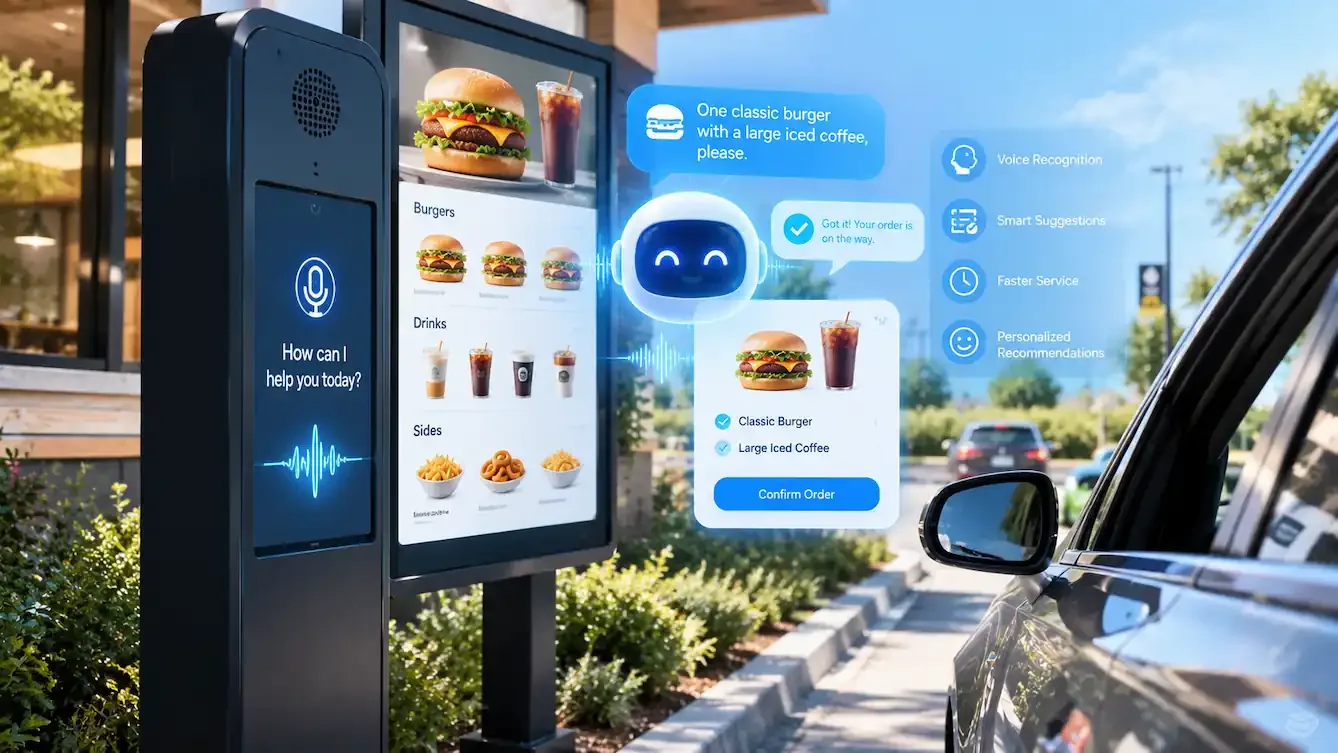
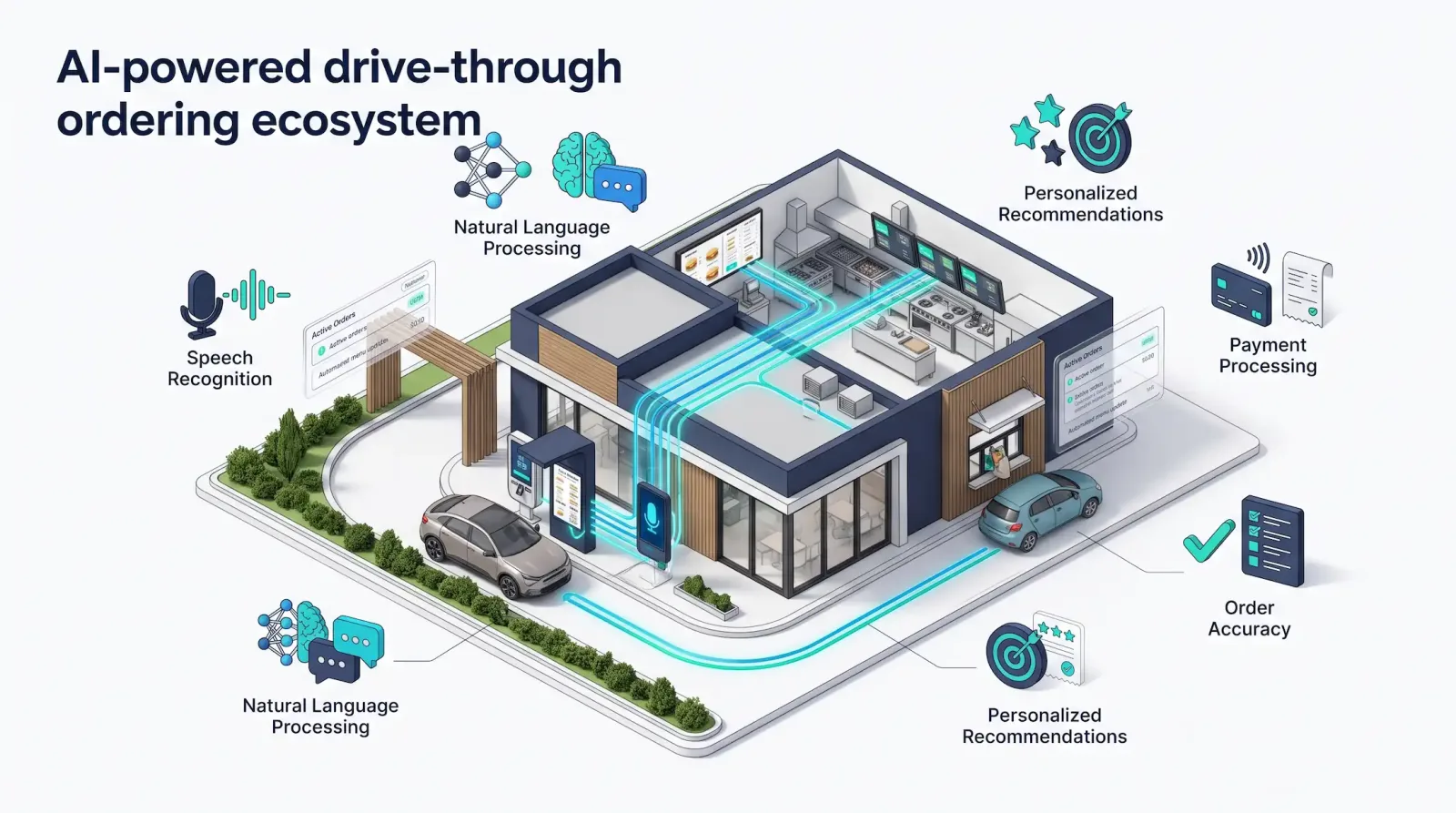
Now picture a modern lane. An AI voice agent takes the order. A digital board changes what it promotes based on time of day and kitchen load. Sensors time every car. The data flows into dashboards, and the whole system gets updated the way an app does: test, measure, release, repeat.
That’s the shift I want to explore. The drive-thru is no longer just a service channel. It’s becoming a software product, with all the economics, risks, and opportunities that implies.
I spend my working days on retail and point-of-sale (POS) systems, so I see this from the plumbing side. What’s striking is not any single technology. It’s that the lane is now a stack: voice, menu, POS, kitchen, payments, and analytics, all needing to work together in real time.
Why the Drive-Thru Matters So Much
The drive-thru isn’t a side channel for QSR brands. For many, it’s the business.
Consider the scale at the top end. Nearly half of surveyed Chick-fil-A locations outperformed the national average of $9.317 million in drive-thru sales in 2024. A channel generating that kind of revenue per store deserves the same engineering attention as any eCommerce site.
And in a high-volume lane, seconds are money. Intouch Insight has estimated that, assuming a drive-thru stays busy, a five-second improvement in total time could yield over $8,000 in sales per unit per year. Multiply that across thousands of locations and you understand why chains treat speed of service as a software optimization problem.
Why This Is Happening Now
Three pressures are pushing the drive-thru toward software.
1. Labor is the constraint. Staffing is the hardest problem in quick service. Every minute a crew member spends wearing a headset is a minute they’re not making food or handing out bags. Operators started treating voice AI as a throughput and labor tool rather than a novelty, using it to capture orders consistently, upsell more often, and keep the line moving when staffing is thin.
2. Digital is eating the order mix. Mobile orders, delivery, and app pickups now share the same kitchen as the lane. Intouch Insight and QSR Magazine noted that digital channels were projected to account for up to 70% of total QSR sales by the end of 2025. The lane has to coordinate with all of that, which only software can do.
3. The technology finally works well enough. Early voice AI stumbled publicly. It’s improving fast.
The Voice AI Reality Check
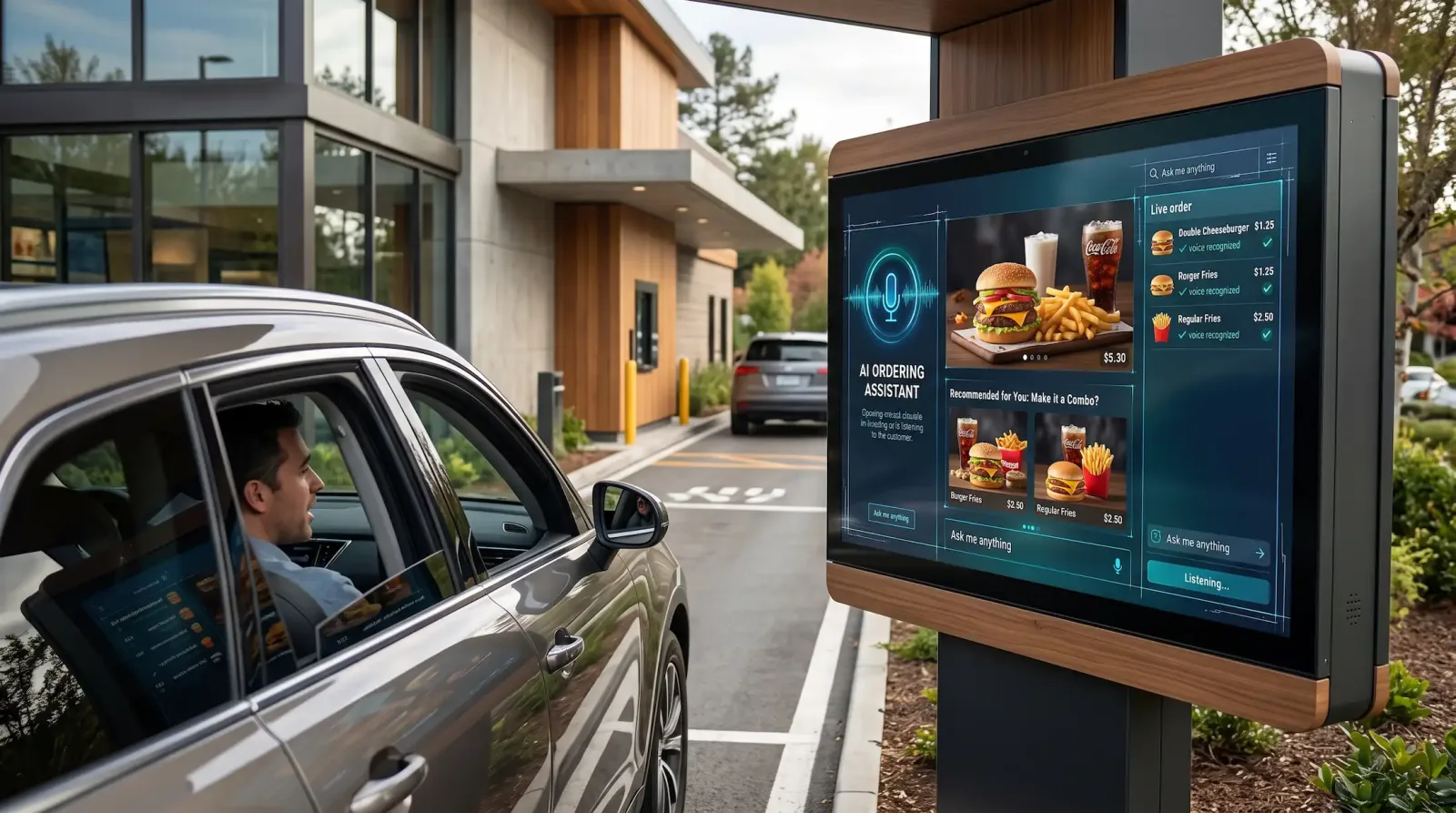
Voice ordering is the headline technology, and its story is not a straight line.
The most famous setback came from the industry leader. McDonald’s ended its IBM automated order-taker test, which had been in-market since late 2021, after highly visible accuracy issues and complaints. It didn’t abandon the idea, though. McDonald’s is deepening a broader Google Cloud partnership to modernize restaurant technology and AI across thousands of stores.
Others pushed ahead. Taco Bell said in July that its automated voice ordering now runs in nearly 900 U.S. stores in 38 states, a rollout of about three years under its partnership with Omilia. Yum! Brands’ NVIDIA partnership is targeting a rollout to 500 restaurants after pilots, covering voice agents, computer vision, and manager-facing analytics. White Castle is expanding SoundHound’s drive-thru AI to more than 100 lanes.
The performance data shows a technology still maturing, but maturing quickly:
| Metric | What the Data Shows |
|---|---|
| Accuracy (2025) | AI-powered drive-thru orders averaged 83% accuracy versus 87% for standard orders; when staff stepped in to support AI, accuracy rose to 95% |
| Speed (2025) | Voice AI systems beat traditional drive-thru benchmarks by an average of 12 seconds |
| Autonomy (2026) | Voice AI fully handled 40% of encounters, up from 20%, and order accuracy rose |
The most important number in that table is the 95%. AI alone is slightly worse than humans. Humans alone are decent. AI plus a human safety net beats both. That tells you the winning model for the next few years: not replacement, but a hybrid where the software handles the routine and people handle the exceptions.
The Menu Board Becomes a Storefront
Voice gets the attention, but the digital menu board may have the bigger financial impact.
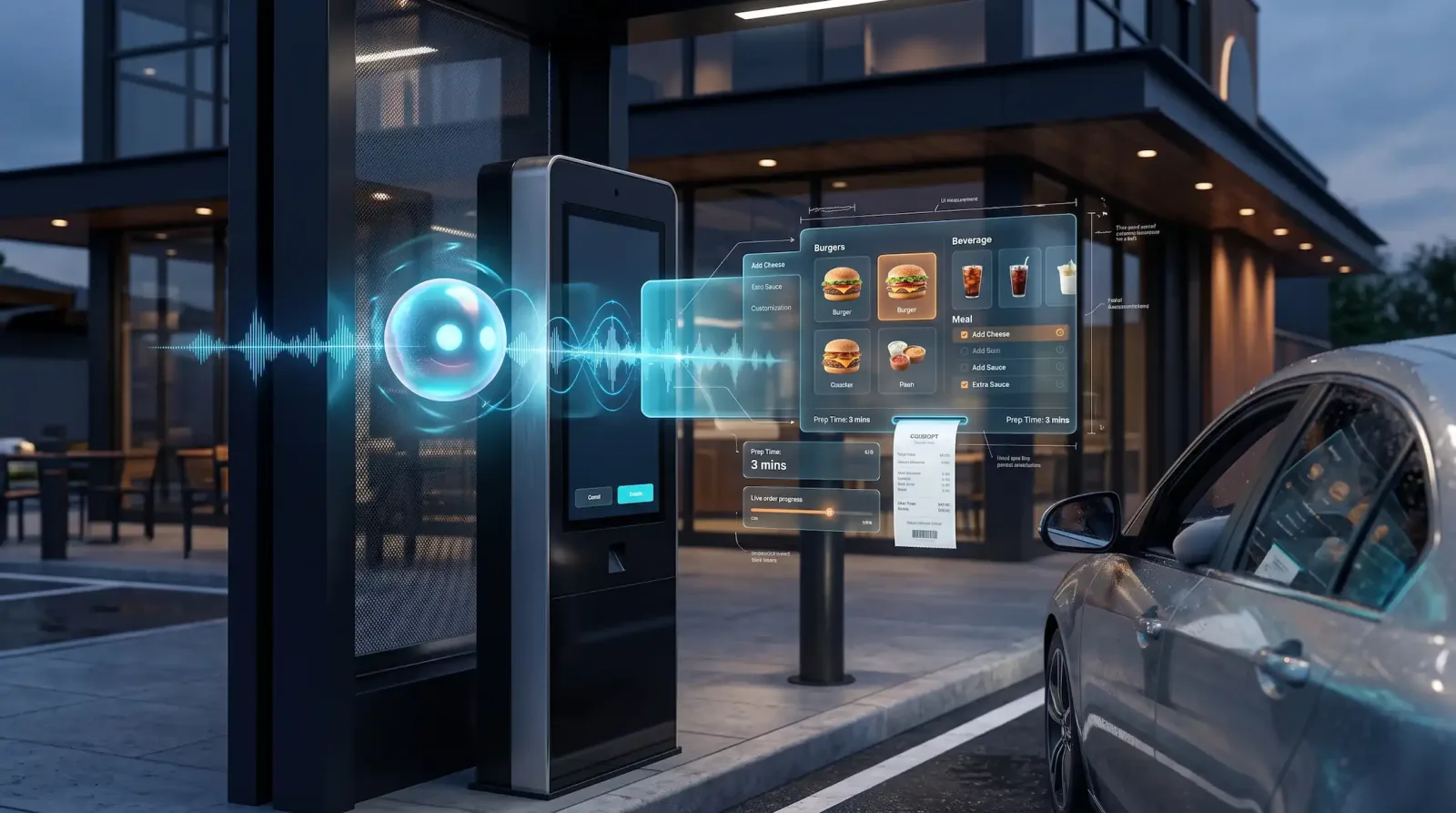
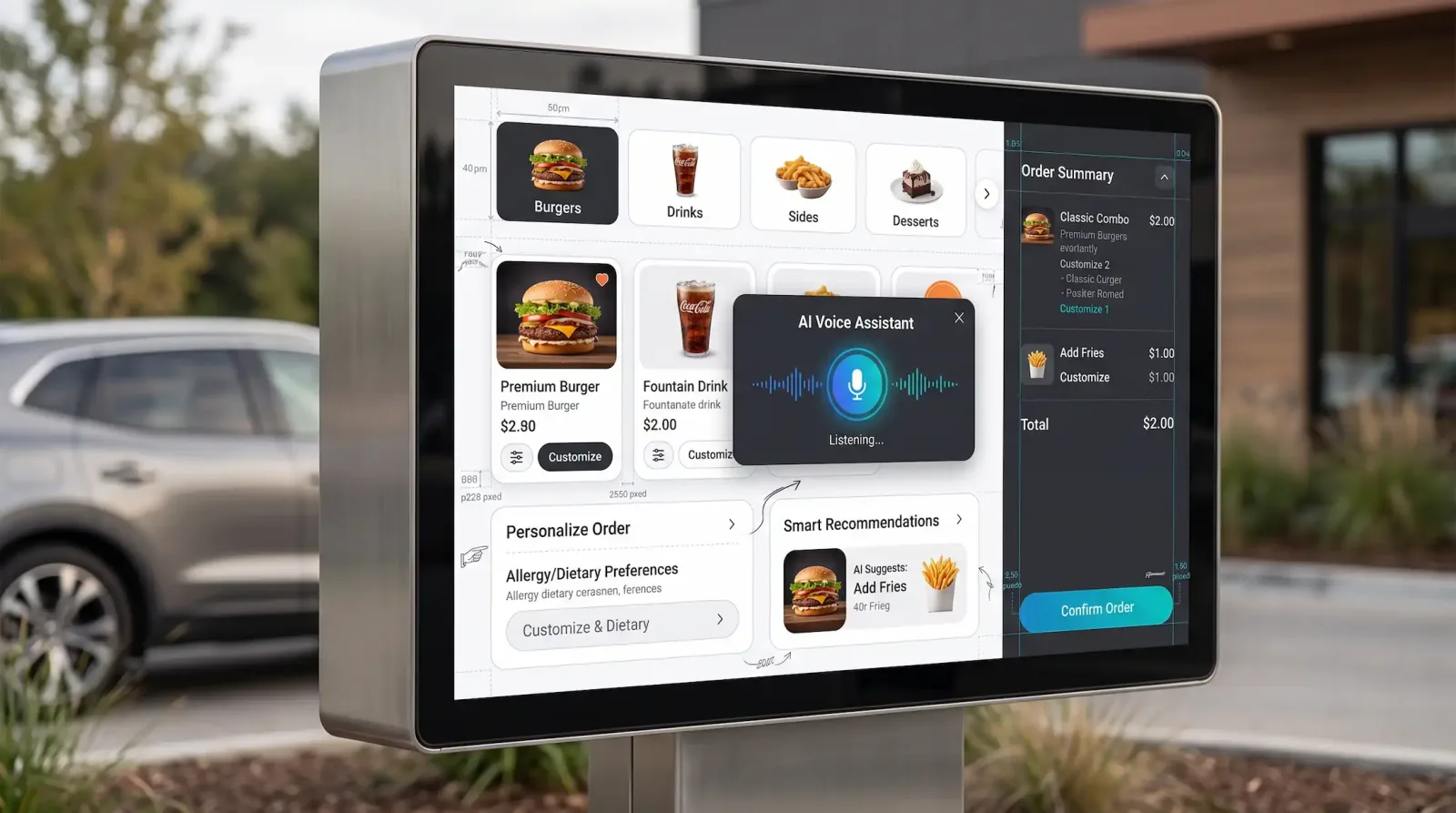
A printed board shows the same thing to everyone, all day. A digital board can change what it promotes based on time, weather, inventory, and how busy the kitchen is. It behaves like a homepage, and it can be A/B tested like one.
The results can be dramatic. At Tim Hortons, new digital boards were part of drive-thru upgrades, and in 2024 Restaurant Brands International reported a 33% increase in sales of promoted items and a 38% rise in overall sales tied to the rollout.
The next step is already arriving. McDonald’s is piloting ads on drive-thru order boards in 450 company-owned U.S. restaurants. That’s a significant signal. Once the menu board is a screen with a captive, high-intent audience, it becomes retail media inventory. The lane stops being only a cost center and starts selling attention.
The Business Impact: Who Wins and Who Loses
Winners
- Chains with integrated tech stacks. Voice AI is only as good as the POS, menu data, and kitchen systems it talks to. Brands that own clean, unified systems can roll out features fast and measure them precisely.
- Operators with disciplined menus. Voice AI performs best with limited modifiers and clear combos. A simpler menu is easier for software to sell.
- Large brands with scale. The fixed cost of building and tuning these systems is spread across thousands of stores. That makes the per-unit cost tiny for a giant and painful for a 20-store franchisee.
Losers
- Small operators without leverage. Independent and regional chains face the same labor pressures but can’t negotiate enterprise pricing or fund custom integrations.
- Brands with complex, customization-heavy menus. Every extra modifier is another chance for software to misunderstand an order.
- The human interaction itself, if handled badly. The 2026 QSR Drive-Thru Report found that when AI handled the ordering conversation, behaviors requiring a crew member to actively speak dropped sharply. Friendliness has measurable value, and automation can quietly erode it.
The Financial Perspective: How the Lane’s P&L Changes
When a channel becomes software, its cost structure changes shape.
Labor shifts from variable to fixed. Wages for order-takers are a variable cost that rises with hours and volume. Voice AI is closer to a fixed subscription per lane. That creates operating leverage: at high volume, the per-order cost falls sharply. At low volume, a struggling store is still paying for the software.
Average check gets engineered, not hoped for. Human crews upsell inconsistently, especially when they’re rushed. Software suggests the add-on every single time. Even a small lift in attachment rate on desserts or drinks, which usually carry high margins, flows straight to contribution margin.
Throughput becomes the core metric. In a busy lane, the real constraint isn’t demand; it’s how many cars you can serve per hour. Shaving seconds from each transaction raises capacity without building new stores, which is the cheapest growth a QSR can buy.
A new revenue line appears. Menu-board advertising turns screen space into a margin-rich income stream with almost no marginal cost.
New risks enter the ledger. Software introduces costs that didn’t exist before: vendor fees, integration maintenance, network reliability, and the cost of errors. A wrong order now has two price tags: the remake and the damage to trust in the system.
The View from the Plumbing: Uptime Is the New Speed
Here’s the part most commentary misses, and it’s where my own work lives.
When the drive-thru was a headset and a register, an outage meant one broken device. When the lane is a stack of voice AI, cloud services, POS, kitchen display, payments, and digital boards, an outage anywhere can stall everything. A network hiccup becomes a line of idling cars. A menu sync failure becomes an AI agent confidently selling an item the kitchen ran out of an hour ago.
That changes what operational excellence means. Infrastructure automation, monitoring, graceful fallback (can a crew member instantly take over when the AI fails?), and reliable menu and inventory data stop being IT housekeeping. They become customer experience. In a software-defined lane, uptime is speed of service.
The Strategic Response: What QSR Operators Should Do
1. Fix the data foundation first. Menu items, modifiers, prices, and availability must be accurate and synchronized across POS, kitchen, boards, and voice AI. Bad data makes every AI feature worse.
2. Design for hybrid service, not full automation. The evidence points to AI handling routine orders with humans stepping in for exceptions. Build the handoff so it’s fast and invisible to the guest.
3. Simplify the menu where it matters. Fewer confusing modifiers mean higher AI accuracy and faster kitchens. Menu engineering and software engineering are now the same conversation.
4. Measure more than speed. Track accuracy, upsell attachment, AI takeover rate, and guest friendliness. Optimizing one number while another quietly slips is the classic trap of software metrics.
5. Treat resilience as a product feature. Invest in monitoring, offline fallback modes, and fast recovery. A lane that fails gracefully protects revenue and trust.
6. Plan the media strategy deliberately. Menu-board ads can be lucrative, but every promoted spot competes with your own high-margin items for the guest’s attention. Price that trade-off before selling the space.
Overall learnings:
Over the next three to five years, I expect the drive-thru to look less like a counter and more like a platform:
- Voice AI handling most routine orders, with humans focusing on food, hospitality, and exceptions.
- Personalized menu boards that recognize loyalty members (with consent) and tailor suggestions.
- Drive-thru retail media becoming a meaningful revenue stream for the largest chains.
- Smarter lane designs built around digital orders, with dedicated pickup lanes for app customers.
- Software release cycles becoming a competitive advantage, with chains that can test and ship lane improvements weekly pulling ahead of those that update once a year.
Speed Is Now Written in Code
For decades, drive-thru performance came down to how well the crew executed under pressure. That still matters. But increasingly, the lane’s speed, accuracy, and average check are being decided by software: how well it listens, what it promotes, how fast it syncs, and whether it stays up at the lunch rush.
The QSR brands that win won’t be the ones with the flashiest AI demo. They’ll be the ones that treat the drive-thru like a product: clean data, tight integration, honest metrics, resilient infrastructure, and humans placed exactly where they add the most value.
The drive-thru has become a software product. The real question for every operator is whether they’re running it like one.
#AIDriveThru #QSR #RestaurantTech #VoiceAI #DriveThru #FoodTech


Comments
No approved comments yet.